

For many Nigerians living abroad, owning a property in Nigeria is more than a financial investment. It can be the foundation for a family home, a retirement plan, a source of rental income or a long-term wealth-building strategy.
But if you are living in the UK, United States, Canada, Europe, the Middle East or another country, buying your first property in Nigeria can feel complicated.
Where should you buy?
How do you know the property is genuine?
How can you inspect a property when you are thousands of kilometres away?
What documents should you request?
And most importantly, how can you protect your money?
The good news is that you can begin your property investment journey from abroad if you follow a structured process and carry out proper due diligence.
Here is a step-by-step guide for Nigerians living abroad who want to buy their first property in Nigeria, particularly in Abuja, the Federal Capital Territory.
Step 1: Determine Why You Want to Buy Property
Before you start looking at properties, establish your investment objective.
Your first property could be for:
- Building your family home
- Retirement
- Rental income
- Long-term land banking
- Property development
- Family inheritance
- Capital preservation
- Building generational wealth
Your objective will help determine the type of property, location, plot size and budget that is appropriate for you.
Don’t buy simply because someone tells you that a particular property is “hot.”
Buy based on your own financial goals.
Step 2: Establish Your Budget
Your budget should go beyond the advertised price of the property.
Consider other potential costs associated with the transaction, including:
- Property price
- Legal fees
- Survey costs
- Documentation
- Registration and title-related expenses
- Development costs
- Estate or service charges where applicable
- Taxes or government charges where applicable
Having a clear budget before you start searching can help you avoid financial pressure later.
Step 3: Choose the Right Location
Location is one of the most important factors in real estate.
For diaspora investors considering Abuja, don’t simply ask, “How much is land here?”
Ask:
What is happening around this location?
Look at accessibility, infrastructure, surrounding developments, demand, neighbourhood growth and the potential use of the property.
You should also consider whether the location suits your long-term objective.
A plot intended for a future family home may require different considerations from land purchased purely for investment.
Step 4: Find a Reputable Real Estate Professional
When you live abroad, having a reliable person or company on the ground can make the investment process easier.
However, don’t choose a real estate professional simply because they were recommended by a friend or relative.
Ask questions.
Request company details.
Ask for property documentation.
Understand the transaction process.
And most importantly, make sure you can independently verify the information provided to you.
Your first property investment should be treated as a serious financial transaction.
Step 5: Request the Property Documents
Before making a major financial commitment, ask for the documents covering the property.
Depending on the type and status of the property, documents may include a Certificate of Occupancy, Right of Occupancy, Deed of Assignment, Survey Plan, Allocation Letter or other relevant documentation.
Do not assume that a document is genuine simply because it looks official.
The documents should be properly reviewed and, where applicable, verified through the appropriate authorities and qualified professionals.
Step 6: Verify the Property
This is one of the most important stages of buying property in Abuja.
The Abuja Geographic Information Systems (AGIS) provides property search and verification of land records within the FCT, alongside other land-related services.
This means diaspora buyers should not rely solely on information supplied by a seller, agent or developer.
Carry out appropriate due diligence.
Confirm the property’s records.
Verify ownership and title information where applicable.
And where necessary, engage an independent property lawyer or surveyor to assist with the process.
Verify before you pay.
Step 7: Inspect the Property—Even if You Are Abroad
Being outside Nigeria doesn’t mean you cannot inspect a property.
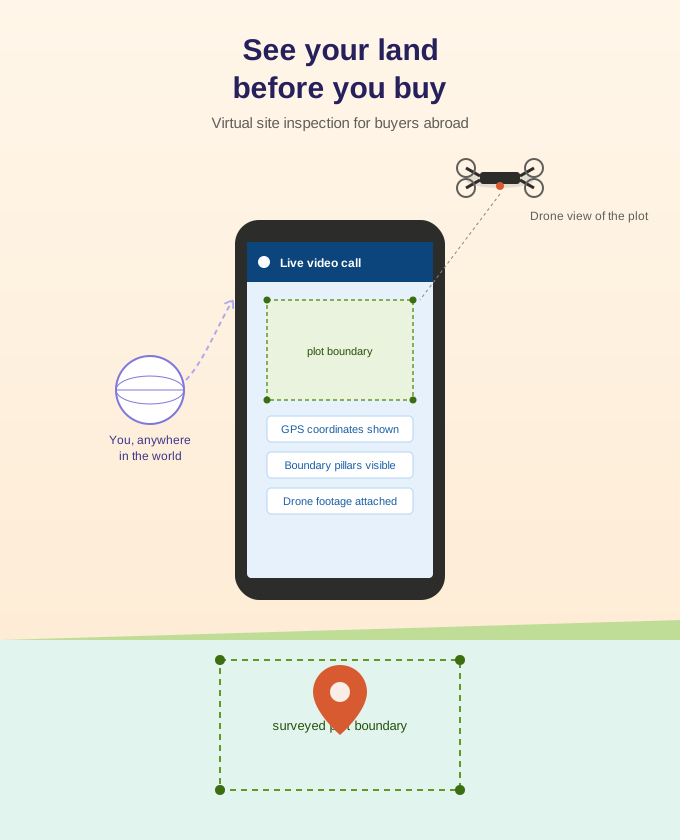
Ask your real estate representative to arrange a live video inspection.
You should be able to see the actual location and surrounding environment.
During a virtual inspection, ask to see:
- The exact property location
- Access roads
- Nearby developments
- Major landmarks
- Estate infrastructure
- Surrounding properties
- The development environment
- Any relevant survey or plot markers
If possible, request a live video call rather than relying exclusively on old photographs or promotional videos.
Step 8: Make Payments Through Proper Channels
Once you have completed the necessary checks and decided to proceed, ensure that your payment is properly documented.
Confirm the official payment details before transferring money.
Be extremely cautious about requests to send large sums into personal accounts when the transaction is supposed to be with a company.
Keep:
- Bank transfer receipts
- Payment confirmations
- Invoices
- Agreements
- Receipts
- Correspondence
A properly documented transaction gives you a clear record of your investment.
Step 9: Understand Your Agreement
Never rush through the paperwork simply because you are excited about owning property in Nigeria.
Read and understand the agreement before signing.
If necessary, engage an independent Nigerian property lawyer to review the documents and explain your rights and obligations.
If you are buying through a representative, make sure any authority granted to that person is properly documented.
Step 10: Complete the Necessary Documentation and Title Process
Buying the property is not necessarily the end of the process.
Depending on the transaction, further documentation, registration or title-perfection steps may be required.
AGIS provides services relating to title documentation, Right-of-Occupancy, Certificates of Occupancy, titled deed plans and property search/verification.
Your lawyer or appropriate professional should guide you through the steps applicable to your particular property.
Keep both digital and physical copies of your important property documents.
Step 11: Plan for What Happens After You Buy
If you live abroad, think beyond the purchase.
Ask yourself:
Who will monitor the property?
Who will handle maintenance?
Who will manage tenants if you build a rental property?
Who will represent me if I need assistance in Nigeria?
Having a reliable property-management or representation arrangement can make remote ownership much easier.
Common Mistakes Nigerians Abroad Should Avoid
Your first property purchase can be exciting, but avoid these common mistakes:
Buying Because Someone Says the Price Will Double
No one can guarantee future property returns.
Research the location and make an informed decision.
Paying Before Verification
Don’t allow pressure to make you skip due diligence.
Relying Entirely on Family or Friends
A family member can help you, but professional verification should still be carried out.
Buying Without Seeing the Location
If you cannot travel, arrange a reliable virtual or physical inspection through a trusted representative.
Ignoring Documentation
The price of a property should never be more important than the security of your ownership.
Why Abuja Can Be an Attractive Starting Point
For Nigerians living abroad who want to invest back home, Abuja offers a wide range of residential and development opportunities.
The city continues to expand, with established districts and emerging communities attracting residents, developers and investors.
But remember: real estate is not a guaranteed-return investment.
The quality of your investment depends on factors including location, documentation, market conditions, infrastructure, demand and your investment strategy.
Your First Property Can Start From Anywhere
You don’t have to wait until you return to Nigeria before beginning your property investment journey.
You can start by identifying your goals, determining your budget, researching locations and speaking with a trusted real estate professional in Abuja.
The most important thing is to start correctly.
Research.
Verify.
Inspect.
Document.
Then invest.
Ready to Buy Your First Property in Nigeria?
If you are a Nigerian living abroad and you are ready to explore land and property investment opportunities in Abuja, you can begin your journey from wherever you are.
For guidance on available property opportunities, locations, documentation and how to begin the process remotely, chat with Alefia Friday James on 08148337425.
Whether you are planning to build your dream home, secure land for your family, start land banking or build a long-term property portfolio, your first investment can begin with one conversation.
Chat Alefia Friday James on 08148337425 to start your Abuja property investment journey today.