

Living abroad should not stop you from owning land in Abuja.
For many Nigerians in the diaspora, buying land in Abuja is an opportunity to secure a future home, build generational wealth or create a long-term investment in Nigeria. However, one major question often comes up:
How can I safely buy land in Abuja when I am not physically in Nigeria?
The answer is proper research, documentation, verification and working with trustworthy real estate professionals.
With the right process, you can identify a property, inspect it remotely, review documentation and proceed with your investment without having to travel to Nigeria immediately.
Here are important steps every diaspora investor should consider before buying land in Abuja remotely.
1. Define Your Investment Goal
Before searching for land, determine exactly why you want to buy.
Are you planning to:
- Build a family home?
- Build rental properties?
- Hold the land for long-term appreciation?
- Develop a commercial property?
- Create an asset for your children?
- Build a retirement home in Abuja?
Your objective will influence the location, plot size, budget and type of property you should consider.
2. Choose the Location Carefully
Not every location in Abuja will suit every investor.
When buying land remotely, investigate the location beyond what you see in a flyer or social media advertisement.
Ask about:
- Accessibility
- Road infrastructure
- Electricity and other utilities
- Existing development
- Nearby estates and communities
- Government development plans
- Demand for property in the area
- Potential future development
A professional property representative should be able to provide the exact location and give you sufficient information to make an informed decision.
3. Request and Review the Property Documents
Never send money simply because someone tells you that a plot is genuine.
Request the available title and transaction documents for the property and have them properly reviewed.
Depending on the property and transaction, documents may include a Certificate of Occupancy, Right of Occupancy, Deed of Assignment, Survey Plan, Allocation Letter and other relevant documents.
The exact documentation required will depend on the property’s ownership and title status.
4. Verify the Property With the Appropriate Authority
This is one of the most important steps when buying land in Abuja.
The Abuja Geographic Information Systems (AGIS) provides property search and verification of land records within the FCT. AGIS also handles land administration and title-related services. (AGIS)
For a remote investor, verification is particularly important because you may not be physically available to investigate the property yourself.
Do not rely solely on documents sent to you by a seller or agent. Where appropriate, engage qualified professionals to conduct the necessary searches and due diligence.
AGIS also provides a legal-search process for land records, including requirements relating to title documents and identification. (AGIS)
5. Use Virtual Inspection to Your Advantage
You don’t necessarily have to board a plane before you can inspect a property.
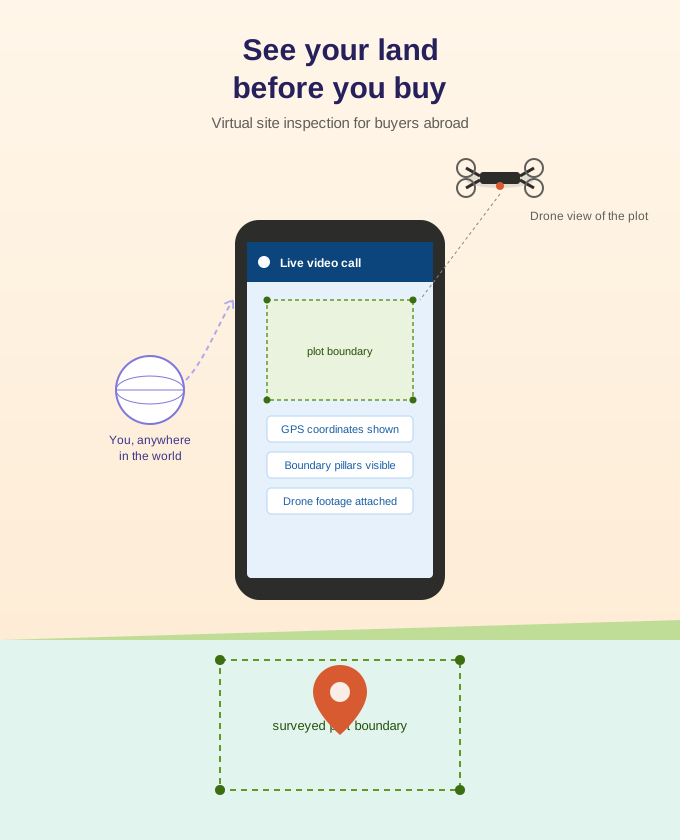
Ask your real estate representative to arrange a live video inspection.
During the inspection, request to see:
- The actual plot
- Access roads
- Surrounding properties
- Landmarks
- Nearby infrastructure
- Estate entrance
- Survey beacons where applicable
- Development around the property
A recorded video can be useful, but a live video call can give you the opportunity to ask questions and request that specific areas be shown to you in real time.
6. Be Careful About Who Receives Your Money
One of the most important rules for remote property investment is to understand who you are paying and why.
Before making payment, confirm:
- The identity of the seller or developer
- The company involved in the transaction
- The property being purchased
- The agreed price
- The payment terms
- The applicable documentation
- The official payment details
Avoid making large payments simply because someone is putting pressure on you with statements such as “another buyer is waiting.”
A serious property transaction should allow you to understand what you are buying before you commit.
7. Consider Legal and Professional Due Diligence
Real estate transactions can involve legal and documentation issues that may not be obvious to someone living outside Nigeria.
Where necessary, engage a qualified property lawyer, surveyor or other appropriate professional to review the transaction.
This is especially important when dealing with complex ownership structures, existing titles, assignments or transactions requiring additional documentation.
8. Understand Proxy and Power-of-Attorney Arrangements
Some property-related processes may require someone to act on your behalf in Nigeria.
For example, AGIS provides procedures for collection by proxy and specifies documentation such as a dated authority letter in relevant circumstances. Certain transactions may also require a Power of Attorney. (AGIS)
Don’t simply hand over broad authority to someone because they are a relative or friend.
If someone will represent you, make sure the arrangement is properly documented and that you understand exactly what authority you are granting.
9. Keep Every Transaction Record
As a diaspora investor, keep digital and physical copies of everything connected to your investment.
This can include:
- Receipts
- Agreements
- Payment confirmations
- Survey documents
- Title documents
- Allocation documents
- Correspondence
- Identification documents
- Inspection videos
- Legal documents
Create a dedicated digital folder for your property investment so that you can easily access your records from anywhere in the world.
10. Don’t Let Distance Make You Rush
Perhaps the biggest advantage you have as a diaspora investor is the ability to take your time.
Don’t allow anyone to pressure you into buying a property simply because you live abroad.
Ask questions. Request documents. Verify the property. Inspect the location. Seek professional advice. Then make your decision.
The objective should not simply be to buy land in Abuja.
The objective should be to buy the right property through a properly documented and transparent process.
Why Diaspora Nigerians Are Looking at Abuja Real Estate
Abuja remains an important property market because of its status as Nigeria’s capital and the continued development of residential and commercial districts across the Federal Capital Territory.
For Nigerians abroad, owning property in Abuja can provide a tangible connection to home while potentially serving long-term family and investment objectives.
However, real estate investment always involves risks, and land appreciation or investment returns are not guaranteed.
The safest approach is to make decisions based on proper verification, documentation, location, professional advice and your personal investment goals.
Start Your Abuja Land Investment From Anywhere in the World
You don’t have to be physically present in Nigeria before you start exploring your Abuja property investment options.
If you are living in the United Kingdom, United States, Canada, Europe, the Middle East or another part of the world and you are considering buying land in Abuja, you can begin by discussing your requirements with a real estate professional on the ground.
For information about available land opportunities, locations, documentation and how to begin your investment process remotely, chat Alefia Friday James on 08148337425.
Start your journey toward owning land in Abuja today.
Chat Alefia Friday James: 08148337425.