

For years, conversations about Abuja real estate market have revolved around infrastructure. New highways, expanding districts, improved road networks, and government-backed developments have traditionally been viewed as the primary drivers of property values. While infrastructure remains an important factor, it is no longer the only force shaping the city’s real estate landscape.
Today’s Abuja market is increasingly influenced by behavioral patterns, investor psychology, capital flows, demographic changes, and shifting lifestyle preferences. Understanding these less visible forces provides a more accurate picture of where opportunities lie and how the market is likely to evolve.
The Rise of Behavior-Driven Demand
Property decisions are no longer based solely on location or proximity to government institutions. Buyers and tenants are making decisions that reflect changing lifestyles and long-term financial goals.
Young professionals increasingly prioritize convenience, security, internet connectivity, recreational amenities, and access to commercial hubs. Families seek neighborhoods with quality schools, healthcare facilities, and community living. Entrepreneurs and remote workers value mixed-use developments that combine residential, office, and retail spaces.
These behavioral shifts have elevated demand in districts that offer a balanced lifestyle rather than merely prestigious addresses.
Capital Is Becoming Smarter
Real estate investment in Abuja has matured significantly. Investors today conduct more detailed market analysis before committing capital. Instead of purchasing land simply because prices are rising, they increasingly examine rental yields, occupancy rates, infrastructure timelines, and long-term appreciation potential.
Institutional investors, diaspora Nigerians, private equity groups, and high-net-worth individuals are also diversifying their portfolios. Many now favor income-producing assets over speculative land banking, reflecting a broader shift toward sustainable returns.
This evolution means capital is flowing toward developments with stronger fundamentals rather than projects driven primarily by hype.
Diaspora Investment Continues to Influence the Market
The Nigerian diaspora remains one of the strongest sources of capital entering Abuja’s property market. However, investment preferences have changed.
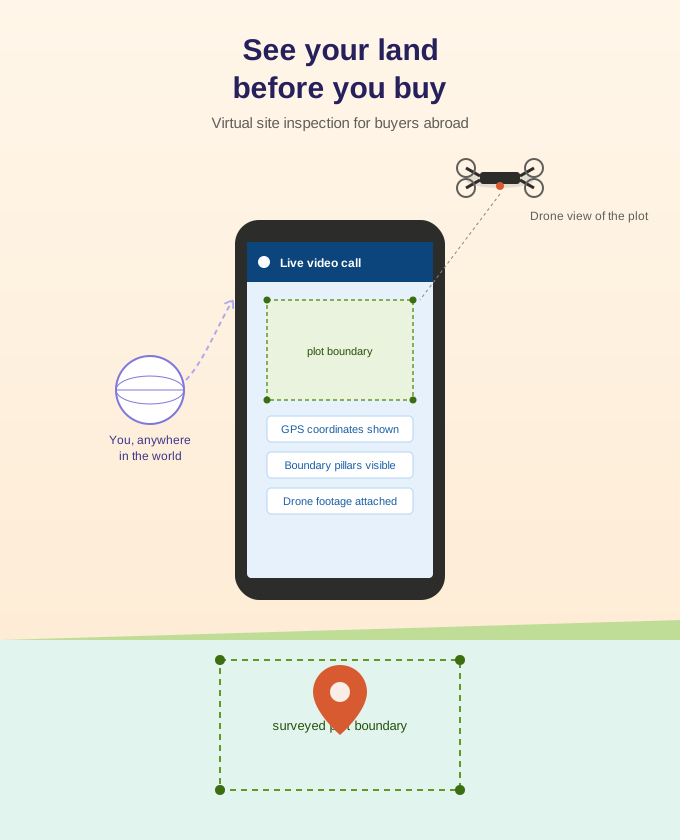
Many diaspora investors now demand transparency, professional property management, verified documentation, and digital transaction processes before committing funds. Developers who provide virtual inspections, regular construction updates, and credible legal structures enjoy a significant competitive advantage.
Trust has become as valuable as location.
Lifestyle Is the New Luxury
Luxury is no longer defined only by expensive finishes or prestigious neighborhoods. Increasingly, buyers associate luxury with quality of life.
Reliable electricity, efficient facility management, recreational spaces, smart home technology, environmental sustainability, and walkable communities have become major selling points.
Developers who understand these evolving expectations are positioning themselves ahead of competitors focused solely on aesthetics.
The Rental Economy Is Expanding
Economic realities have encouraged many residents to prioritize flexibility over ownership. This has contributed to increased demand for rental accommodation across multiple price segments.
Fully serviced apartments, co-living spaces, furnished short-term rentals, and flexible lease arrangements are becoming increasingly attractive, especially among young professionals, expatriates, consultants, and corporate organizations.
This trend is creating new investment opportunities beyond traditional residential sales.
Data Is Replacing Assumptions
Historically, many property decisions relied on informal market knowledge or anecdotal evidence. Today, investors increasingly depend on data.
Vacancy rates, rental performance, population growth, neighborhood absorption rates, construction pipelines, and demographic trends are becoming essential indicators for investment decisions.
Developers and investors who leverage reliable market intelligence gain a significant advantage in identifying emerging growth corridors before they become mainstream.
The Power of Perception
Real estate markets are influenced not only by physical development but also by perception.
A district’s reputation for safety, accessibility, prestige, or investment potential often attracts buyers even before major infrastructure projects are completed. Social media, digital marketing, online property platforms, and investor communities now play a substantial role in shaping these perceptions.
In many cases, confidence precedes construction.
Sustainability Is Moving Into the Mainstream
Environmental considerations are gradually becoming part of Abuja’s real estate conversation. Buyers are paying greater attention to energy efficiency, water management, green spaces, and environmentally responsible building practices.
While sustainability may not yet be the primary purchase driver for every buyer, it increasingly influences premium developments targeting sophisticated investors and corporate clients.
The Human Factor Will Define the Next Market Cycle
Ultimately, real estate is about people before it is about buildings.
Population growth, migration patterns, household formation, income levels, consumer confidence, financing accessibility, and changing aspirations collectively determine market direction.
Infrastructure creates opportunity, but human behavior determines whether that opportunity translates into sustained demand.
Conclusion
Abuja’s real estate market is entering a more sophisticated phase. Roads, bridges, and public infrastructure will continue to influence development, but they are no longer the complete story.
Behavioral trends, smarter capital allocation, diaspora confidence, lifestyle preferences, digital transparency, and evolving investment strategies are becoming equally important indicators of future growth.
For developers, investors, policymakers, and homebuyers, the greatest opportunities may lie not simply in watching where the next road is built, but in understanding how people think, invest, and choose to live.
The future of Abuja real estate will belong to those who recognize that the strongest Abuja market signals are often the ones that cannot be seen from the skyline alone.