

Buying land in Abuja is one of the smartest investments you can make in Nigeria, especially in high-growth districts like Katampe Extension, Guzape 2, Kuje, Idu, Lugbe, and Asokoro Extension. However, the same market that creates wealth also attracts fraudsters who sell fake or disputed land.
One of the most important steps every buyer must take before paying for any property is AGIS verification.
The Abuja Geographic Information Systems (AGIS) is the official government body responsible for managing land records in the Federal Capital Territory. If a land is not properly registered at AGIS, it is not legally safe—no matter how genuine the documents look.
Understanding how to verify land at AGIS can save you from scams, court cases, and total loss of investment.
What is AGIS and Why It Matters in Abuja Land Transactions
AGIS (Abuja Geographic Information Systems) is the official land registry for the Federal Capital Territory (FCT).
It is responsible for:
- Recording all land ownership in Abuja
- Issuing and validating Certificates of Occupancy (C of O)
- Tracking Right of Occupancy (R of O) records
- Monitoring land allocation and transfers
- Detecting encumbrances and disputes
Every genuine land title in Abuja must exist in the AGIS database.
If it is not recorded there, it is either:
- Fake
- Unregistered
- Under dispute
- Or under government acquisition
This is why AGIS verification is the most reliable safeguard before payment.
Why You Must Verify Land at AGIS Before Paying
Many buyers lose money because they trust documents without verification. AGIS helps you confirm:
- True ownership of the land
- Whether the seller is legitimate
- If the land has been sold before
- If it is under government acquisition
- If there are legal disputes or encumbrances
In Abuja, appearance is not proof. A document may look real but still be fake or invalid.
Step-by-Step Guide to Verify Land at AGIS
1. Collect All Land Documents From the Seller
Before visiting AGIS or initiating verification, request all available documents, including:
- Certificate of Occupancy (C of O) or R of O
- Survey plan
- Allocation letter (if applicable)
- Deed of assignment
- Seller’s identification
If a seller refuses to provide these documents, consider it a major warning sign.
2. Cross-Check Document Details
Ensure the following details match across all documents:
- Owner’s name
- Plot number
- District/location
- Survey plan coordinates
- File or registration number
Even a small mismatch can indicate forgery or manipulation.
3. Conduct Official Search at AGIS
Visit the AGIS office or assign your lawyer to carry out a land search.
AGIS will check:
- Whether the C of O or R of O is genuine
- If the land exists in their official records
- Ownership history
- Encumbrances (mortgages, disputes, restrictions)
- Government acquisition status
This is the most important stage of verification.
📍 AGIS is located at the Central Business District, Abuja FCT.
4. Review the AGIS Search Report Carefully
After the search, AGIS will issue a report showing the status of the land.
A “clean” report should confirm:
- Verified registered owner
- Correct plot and cadastral details
- No legal disputes
- No government acquisition
- No encumbrances or restrictions
If any issue appears in the report, pause the transaction immediately.
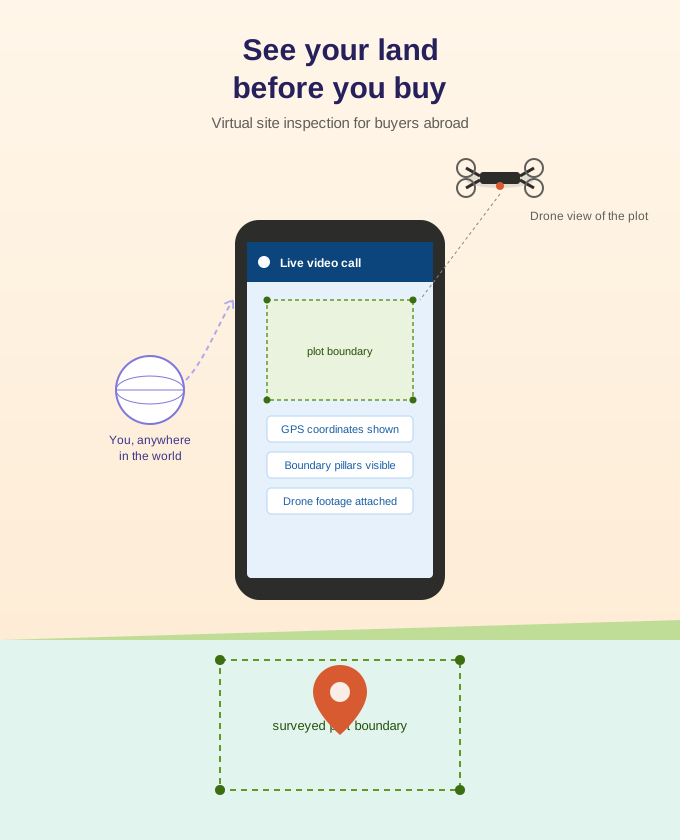
5. Confirm Survey Plan With Physical Coordinates
AGIS verification should be followed by physical confirmation.
Hire a surveyor to:
- Match coordinates on the survey plan
- Confirm beacons on site
- Verify land boundaries
- Check for encroachment or dispute
This ensures the land on paper matches the land on ground.
6. Engage a Real Estate Lawyer
A qualified property lawyer will:
- Interpret AGIS results
- Verify ownership chain
- Detect forged documents
- Ensure proper legal transfer
- Protect your interest during payment
This step is critical for diaspora buyers or first-time investors.
7. Verify Government Acquisition Status
Some lands in Abuja are not legally available for sale because they are:
- Under government acquisition
- Reserved for infrastructure projects
- Zoned for specific public use
AGIS will clearly indicate this during verification.
8. Never Rely on Photocopies or WhatsApp Documents
A major scam tactic in Abuja is sending fake scanned documents.
Always insist on:
- Physical verification at AGIS
- Original documents
- Official search report
If a seller avoids AGIS verification, walk away.
Common Red Flags During AGIS Verification
Watch out for:
- Seller refusing AGIS search
- Mismatch in document details
- Suspiciously cheap land prices
- Pressure to “pay fast”
- No registered file number
- Missing survey coordinates
These are warning signs of fraud.
Best Areas to Buy Genuine Land in Abuja
If you are investing after successful AGIS verification, these areas remain strong:
Katampe Extension
Fast-growing residential and commercial hub.
Guzape 2
High-end luxury development zone.
Kuje
Affordable land with long-term appreciation.
Idu
Industrial and infrastructure expansion area.
Asokoro Extension
Premium real estate district for high-value investors.
Why AGIS Verification Protects Your Investment
AGIS verification is not optional—it is essential. It helps you:
- Avoid fake land scams
- Confirm legal ownership
- Prevent double allocation
- Secure long-term investment safety
- Avoid government demolition risks
In Abuja real estate, what is not verified is not safe.
Trusted Real Estate Support in Abuja
For safe and verified land transactions in Abuja, investors can work with Standard Ranks Properties Limited, a trusted real estate firm helping buyers secure genuine properties across key Abuja districts.
For professional assistance, verified land deals, and guided inspections, contact Alefia Friday James on 08148337425.