

Buying land in Abuja can be one of the most profitable real estate investments in Nigeria, especially in fast-growing areas like Katampe Extension, Guzape 2, Kuje, Idu, Lugbe, and Asokoro Extension. However, one of the most dangerous mistakes buyers make is purchasing land that is under government acquisition. How to Know if Abuja Land Is Under Government Acquisition
Land under government acquisition is not legally available for private ownership or development. Yet, many unsuspecting buyers still fall victim to fraud or poor verification, losing millions of naira in the process.
Understanding how to identify government-acquired land in Abuja is essential before making any payment.
What is Government Acquisition in Abuja?
Government acquisition simply means the Federal Capital Territory (FCT) government has legally taken control of a piece of land for public use, planning, infrastructure, or future development.
Such land may be reserved for:
- Roads and highways
- Government buildings
- Schools and hospitals
- Security installations
- Urban development projects
- Future expansion zones
Once a land is under acquisition, it cannot be freely sold or developed unless it is properly allocated or de-acquired by the government.
Why You Must Avoid Government-Acquired Land
Buying government-acquired land in Abuja can lead to serious consequences, including:
- Total loss of investment
- Demolition of structures
- Legal disputes with authorities
- Inability to register ownership
- Loss of development rights
Many properties advertised as “cheap land in Abuja” often fall under this category.
1. Verify Through AGIS (Most Important Step)
The Abuja Geographic Information Systems (AGIS) is the official authority for land records in the FCT.
Before buying any land, conduct a search at AGIS to confirm:
- Ownership status
- Whether the land is under acquisition
- If it has been allocated
- Existing encumbrances or restrictions
- Validity of title documents
If AGIS marks the land as “under acquisition,” it is a major red flag.
2. Check the Land Status on the Survey Plan
A genuine survey plan will indicate whether a land is:
- Free from acquisition
- Under government layout
- Reserved for future development
- Or already allocated
Always ensure the survey plan is prepared by a registered surveyor and cross-checked with AGIS records.
3. Look for “Excision” or “Allocation” Status
In Abuja real estate, land status matters.
Common terms include:
Excision
This means the government has released the land for private ownership. Such land is safer to buy.
Allocation
This means the land has been officially allocated to an individual or developer.
If a land has neither excision nor allocation, it may still be under government control.
4. Conduct a Physical Land Inspection
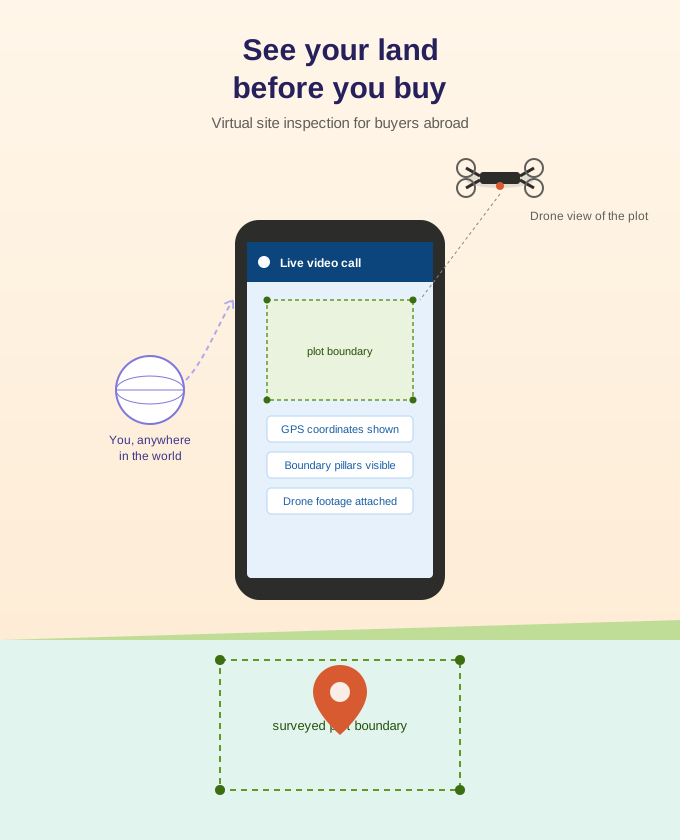
Even after document verification, always visit the site or send a trusted representative.
During inspection, check:
- Presence of government markings or signs
- Ongoing government projects nearby
- Boundary disputes or encroachment
- Empty undeveloped reserved zones
- Restricted access areas
Physical inspection helps confirm what documents alone may not reveal.
5. Consult a Real Estate Lawyer
A qualified property lawyer can help you determine:
- Whether the land has legal backing
- If it has been revoked or re-acquired
- If documents are genuine or manipulated
- If there are pending government interests
Legal review is especially important for diaspora investors or first-time buyers.
6. Be Careful With “Cheap Land Offers”
One of the biggest indicators of government-acquired land is unusually low pricing.
Scammers often use phrases like:
- “Buy now before price increases”
- “Emergency allocation sale”
- “Fast-rising area opportunity”
If the price is far below surrounding market value, investigate thoroughly.
7. Confirm With the Land Registry
The Abuja land registry holds official records of all land allocations and ownership history.
A proper search will reveal:
- If the land has been previously revoked
- If ownership is valid
- If multiple allocations exist
- If the land is legally transferable
8. Check for Government Development Plans
Some lands are reserved for future government projects even if they appear vacant.
You should check for:
- Road expansion plans
- Public infrastructure projects
- Urban masterplan zoning
- FCT development schemes
If a land falls within such plans, it may not be safe for private purchase.
9. Verify Seller Claims With Documentation
Never rely on verbal assurances from agents or sellers.
Always demand:
- Certificate of Occupancy (C of O) or R of O
- Survey plan
- Allocation documents
- AGIS verification report
If any of these are missing or inconsistent, proceed with caution.
10. Avoid Pressure and Urgent Sales Tactics
Fraudsters often push buyers to act quickly to avoid proper verification.
Common tactics include:
- “Another buyer is ready to pay”
- “Offer ends today”
- “Limited plots available”
Genuine land transactions do not require rushed decisions.
Signs That Land May Be Under Government Acquisition
- No verifiable AGIS record
- Missing or fake survey plan
- Very cheap price compared to nearby areas
- Seller avoids official verification
- Conflicting ownership information
- Land located in undeveloped reserved zones
Best Areas to Buy Safe and Verified Land in Abuja
After proper verification, these Abuja locations remain attractive for investment:
Katampe Extension
Fast-developing residential and commercial hub.
Guzape 2
Luxury real estate hotspot with strong demand.
Kuje
Affordable land with strong long-term appreciation.
Idu
Industrial and infrastructure growth zone.
Asokoro Extension
High-value premium investment district.
Knowing how to identify government-acquired land in Abuja is one of the most important steps in protecting your real estate investment. Many buyers lose money simply because they fail to conduct proper verification before payment.
Always rely on AGIS checks, physical inspection, legal review, and proper documentation before making any commitment.
In Abuja real estate, due diligence is not optional—it is protection.
Trusted Real Estate Support in Abuja
For safe, verified, and secure land investments in Abuja, buyers can work with Standard Ranks Properties Limited, a trusted real estate company offering verified properties across key Abuja districts.
For professional assistance and verified land deals, contact Alefia Friday James on 08148337425.