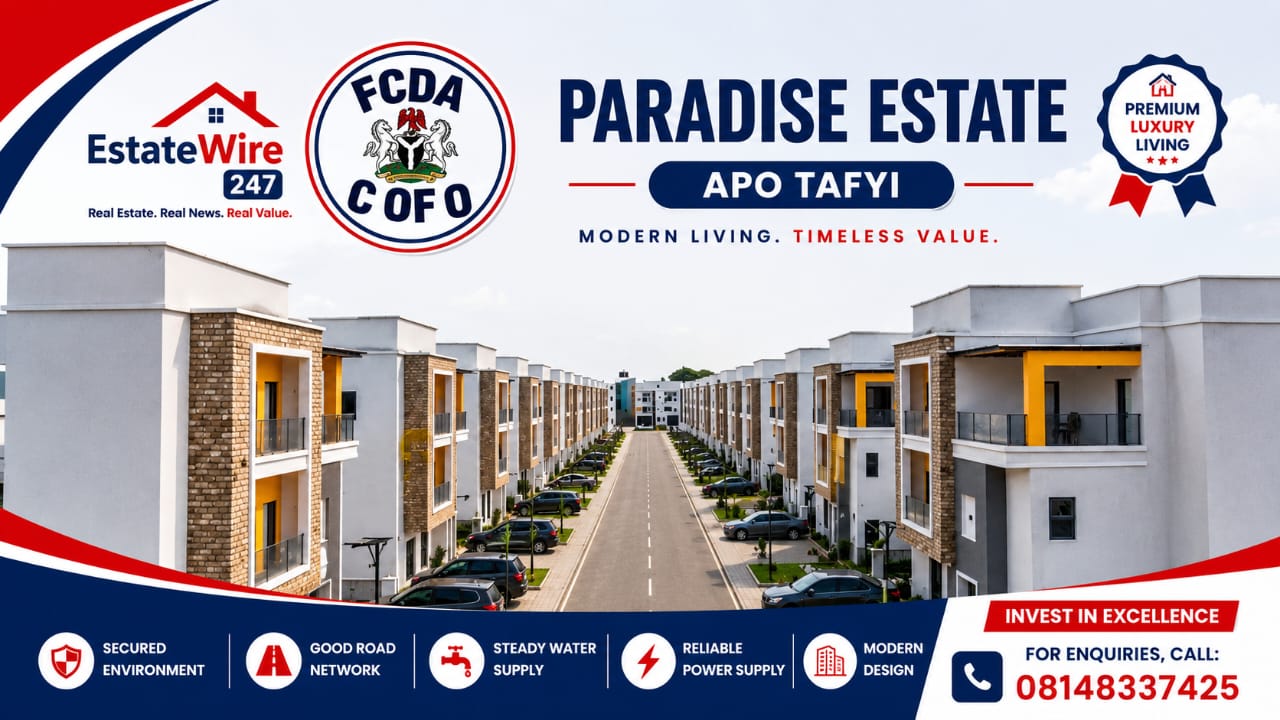


Buying land in Abuja is not just about owning property—it is about positioning yourself inside one of Africa’s fastest-growing and most structured real estate markets. The Federal Capital Territory (FCT) is designed in a way that directly influences land value, demand, infrastructure, and long-term investment returns.
Unlike many Nigerian cities where land values are random, Abuja follows a structured development system based on districts and phases. This means where you buy determines how fast your property appreciates and the kind of returns you can expect.
This guide breaks down Abuja district-by-district with real-world explanations and practical investment examples so you can understand exactly where money is being made in Abuja real estate.
Understanding Abuja Before Buying Land
Before choosing a district, you must understand the core drivers of land value in Abuja: proximity to the Central Business District (CBD), government presence and security level, road and infrastructure development, availability of approved titles (C of O, R of O, FCDA allocation), demand from residents and businesses, and future expansion plans of the city.
In simple terms, the closer you are to the city center, the more expensive the land. The further you go outward, the cheaper it becomes—but often with higher long-term growth potential.
Maitama: Ultra-Premium Investment Zone
Maitama is Abuja’s most elite district and one of the most expensive locations in Nigeria.
A 1,000sqm plot in Maitama can cost hundreds of millions of naira, and most land is already developed or reallocated. New opportunities are extremely rare, and entry barriers are very high.
For example, an investor who acquired land in Maitama 10–15 years ago at around ₦20 million to ₦40 million now holds property worth over ₦300 million depending on exact location and development.
Maitama is best suited for luxury real estate developers, embassy housing projects, corporate headquarters, and high-net-worth individuals. It is not a speculative market but a wealth preservation zone.
Asokoro: Government and Diplomatic Power Zone
Asokoro is one of the most secure and politically significant districts in Abuja, hosting top government officials, diplomats, and foreign missions.
Land here is extremely limited, and approvals are tightly controlled. Infrastructure is excellent, and demand remains consistently high.
For example, a luxury duplex in Asokoro can generate between ₦15 million and ₦40 million annually in rental income depending on size, furnishing, and proximity to key institutions.
Asokoro is ideal for luxury residential developments, diplomatic housing, and premium long-term investment.
Wuse: Abuja’s Commercial Money Hub
Wuse is one of the busiest commercial districts in Abuja, divided into Wuse I and Wuse II.
A practical example of its value is a commercial plaza in Wuse II where individual shops can rent for between ₦2 million and ₦10 million annually depending on size and frontage.
Wuse thrives on high human traffic, banks, offices, restaurants, and retail demand.
It is best suited for shopping complexes, office buildings, hotels, and mixed-use commercial developments. Wuse is where real estate meets consistent cash flow.
Garki: Established Residential and Business District
Garki is one of the earliest developed districts in Abuja and remains highly active today.
Many older buildings are being demolished and replaced with modern apartments and commercial structures.
For example, a redeveloped property in Garki can transform a low-yield building into a multi-unit apartment generating stable rental income.
Garki is ideal for redevelopment projects, residential apartments, and commercial expansion.
Jabi: Lifestyle and Commercial Waterfront Zone
Jabi has become one of Abuja’s most dynamic districts due to its waterfront development and lifestyle appeal.
For example, short-let apartments near Jabi Lake can generate between ₦8 million and ₦25 million annually depending on design, furnishing, and occupancy rates.
Jabi is driven by entertainment, hospitality, malls, and modern residential estates.
It is ideal for Airbnb investments, hotels, restaurants, and lifestyle-driven developments.
Guzape: Fast-Rising Luxury District
Guzape is one of Abuja’s fastest-appreciating luxury real estate zones.
For example, land that sold for ₦25 million to ₦50 million a few years ago can now exceed ₦150 million to ₦300 million depending on location and access roads.
Guzape attracts high-income buyers looking for hillside luxury homes and exclusive estates.
It is ideal for luxury villas, gated estates, and premium residential developments.
Katampe: Strategic Growth Corridor
Katampe is centrally located and rapidly developing into a high-value real estate hub.
For example, duplexes in new estates are selling between ₦80 million and ₦250 million depending on finishing and location.
Katampe benefits from infrastructure expansion and proximity to major districts.
It is ideal for mid-to-high-end residential and commercial developments.
Jahi: Fast-Growing Middle-Class Hub
Jahi is one of Abuja’s most active residential markets.
For example, land purchased for ₦10 million to ₦15 million years ago now sells for ₦40 million to ₦80 million.
Jahi is driven by estate developments, middle-class housing demand, and accessibility.
It is ideal for residential estates, apartments, and rental investments.
Wuye and Kado: Balanced Investment Corridors
Wuye and Kado sit between luxury and emerging districts.
For example, a 2-bedroom apartment in Wuye can generate between ₦3 million and ₦7 million annually in rent depending on location and finishing.
These areas benefit from strong infrastructure and steady demand.
They are ideal for residential apartments and mixed-use developments targeting professionals.
Mabushi: Emerging Commercial Hub
Mabushi is becoming a major mixed-use district due to its proximity to the CBD.
For example, office spaces and apartments here are seeing rising demand from businesses and professionals.
It is ideal for commercial buildings, apartments, and office developments.
Lokogoma: Rapid Population Growth Zone
Lokogoma is one of Abuja’s fastest-growing residential districts.
For example, land bought for ₦3 million to ₦5 million years ago now sells between ₦20 million and ₦40 million depending on exact location.
Lokogoma is driven by population growth and estate expansion.
It is ideal for residential estates, rentals, and land banking.
Idu: Industrial and Logistics Power Zone
Idu is Abuja’s industrial and transportation hub, supported by the Abuja railway station.
For example, warehouses in Idu can generate between ₦5 million and ₦20 million annually depending on size and usage.
It is ideal for logistics companies, warehouses, factories, and industrial developments.
Karsana: Future Estate Development Zone
Karsana has large undeveloped land parcels attracting major estate developers.
For example, developers acquire large plots and later subdivide into residential estates for significant profit margins.
It is ideal for long-term estate development and land banking.
Galadimawa: Expanding Residential Zone
Galadimawa is experiencing rapid residential growth due to infrastructure development.
For example, duplexes in new estates sell between ₦60 million and ₦150 million depending on finishing.
It is ideal for mid-income residential development.
Satellite Towns: Entry-Level Investment Zones
Areas such as Lugbe, Kuje, Kubwa, Gwagwalada, and Dawaki offer affordable land options.
For example, a ₦2 million to ₦5 million plot today can appreciate significantly as Abuja expands outward.
These areas are ideal for first-time buyers and long-term investors.
Key Lessons for Abuja Land Buyers
Location determines value, timing determines profit, and documentation determines safety.
Always verify land titles such as C of O, R of O, or allocation documents, confirm government acquisition status, and conduct due diligence through AGIS or legal experts.
Abuja is a structured real estate ecosystem where every district plays a strategic role. From luxury zones like Maitama and Asokoro to high-growth areas like Jahi, Lokogoma, and Karsana, each location offers different levels of opportunity.
The biggest gains in Abuja real estate come from understanding not just where to buy, but when to buy. Smart investors focus on emerging districts early and hold long-term as infrastructure drives appreciation.
In Abuja, knowledge of districts is not just information—it is wealth strategy.